
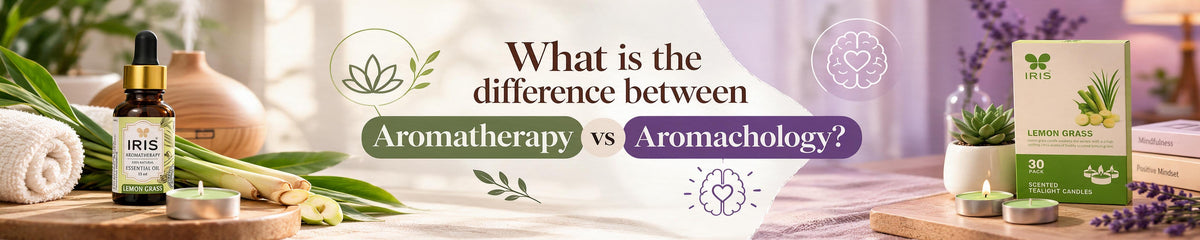
Aromatherapy is a complementary wellness practice that uses essential oils from aromatic plants, commonly through inhalation or diluted topical application. Aromachology is the study of how fragrances and smells can influence psychological and emotional experiences, including mood, perception and behaviour. Aromachology is broader because it can examine responses to both natural and formulated fragrances.
Aromatherapy and aromachology sound like they should be the same thing. They both involve fragrance, talk about how aroma can affect us, and seem to suspiciously end with “-ology.” But they aren't quite the same.
One is a wellness practice built around aromatic plant oils. The other looks at the relationship between fragrance and our psychological responses to it. And that distinction becomes particularly interesting when you move beyond essential oil bottles and into the fragrances we actually encounter every day.
So, what exactly is the difference between aromatherapy and aromachology?
What Is Aromatherapy?
Aromatherapy uses essential oils derived from aromatic plants as part of a holistic wellness approach. Oils from plants such as lavender, rosemary, lemongrass, peppermint, bergamot, cedarwood and geranium are among those commonly used. Depending on the practice, they may be inhaled or diluted and applied to the skin.

A scented candle that smells like lavender isn't automatically an aromatherapy product. Neither is every floral diffuser. Aromatherapy refers to the use of essential oils for a particular purpose (for example – sleep issues, congested nose, quick stress relief). Research exists for several applications, but the results vary depending on the oil, its quality, application method and usage consistency.
What Is Aromachology?
Aromachology is where fragrance meets psychology.
It is concerned with the relationship between fragrance and human feelings. The term has been used to understand the psychological and physiological responses associated with aroma - including how it may influence temporary states such as mood and perception
Unlike aromatherapy, aromachology isn't limited to essential oils. It can explore how people respond to a wide range of natural and formulated fragrances. It studies how a pleasant fragrance changes state of mind, how people respond to an environment, or whether an aroma alters perception or behaviour. There is ample olfactory research evidence that fragrance can influence emotional states subject to context and individual differences.

Aromatherapy vs Aromachology Explained
| Aromatherapy | Aromachology |
| A complementary wellness practice involving essential oils derived from aromatic plants. | The study of how fragrances can affect mood, emotions and behaviour. |
| Focuses on using essential oils through methods like inhalation or diluted topical application. | Focuses on understanding people's psychological responses to fragrances. |
| Essential oils are central to the practice. | It can explore both natural and formulated fragrances. |
| Think: How can essential oils be used as part of a wellness ritual? | Think: What happens when we experience this particular aroma? |
Why Does Fragrance Change the Way You Feel?
Here's where things get fascinating.
Olfactory perception is closely connected with emotional, cognitive and behavioural processes. Research into olfaction suggests that smells can influence mood and perception, but the response isn't determined by the chemical composition of a fragrance alone. Personal experience, expectations, culture, personality and context can also shape the way an aroma is experienced.
But your brain doesn't come with a universal fragrance dictionary. A fragrance that feels comforting to you might be completely ordinary to someone else. Another person might associate the same aroma with a place, ritual or experience that you don't share. So, if someone tells you that one particular scent always makes everyone feel a certain way, you can be reasonably sceptical.
Fragrance isn't quite that obedient.
Is It The Fragrance Or The Person?
Imagine reaching for lavender before bed.
From an aromatherapy perspective, you're using an aromatic essential oil as part of a wellness practice. From an aromachology perspective, the interesting question is what that fragrance actually makes you experience.
Maybe it makes the room feel calmer. Maybe it reminds you of a holiday where the hotel bathroom smelled faintly of lavender. Maybe it reminds you of your grandmother's cupboard. Or maybe you smell it and think, absolutely not. Your partner might love it while you reach for something completely different. That isn't unusual. We don't experience fragrance with a blank slate.
Think about the smell of freshly brewed coffee. For one person, it means a slow Sunday morning. For another, it is the unmistakable signal that a long workday has begun. The aroma is the same. The associations are not.
The same thing happens with home fragrance. A floral candle might make one person think of fresh flowers and another think of a familiar perfume. A woody fragrance may feel sophisticated in one setting and too heavy in another. Even the same person can respond differently to it depending on the time, place or occasion.
The fragrance hasn't changed. Your relationship with it defines how you’ll experience it. This is why aromachology pays attention not only to the fragrance itself, but also to factors such as personal preference, experience and context.

Aromatherapy or aromachology: Which one is right for you?
You don't really have to pick a winner between aromatherapy and aromachology. The two ideas can happily coexist. You can enjoy an essential-oil ritual while also being fascinated by the way a fragrance changes the feeling of a space.
A fragrance can be studied, felt and formulated. What it means to you is the part no formula can quite predict. The science may explain how we experience fragrance. Your preferences decide which ones become part of your world.
Key Takeaways
- Aromatherapy is a complementary wellness practice involving essential oils.
- Aromachology explores how smells and fragrances relate to psychological experiences.
- Essential oils are central to aromatherapy but aren't a requirement for aromachology.
- Aromachology can consider both natural and formulated fragrances.
- Fragrance responses vary between people because memories, preferences and context matter.
- A scent can contribute to the sensory atmosphere of a space without producing the same response in everyone.



Leave a comment
This site is protected by hCaptcha and the hCaptcha Privacy Policy and Terms of Service apply.